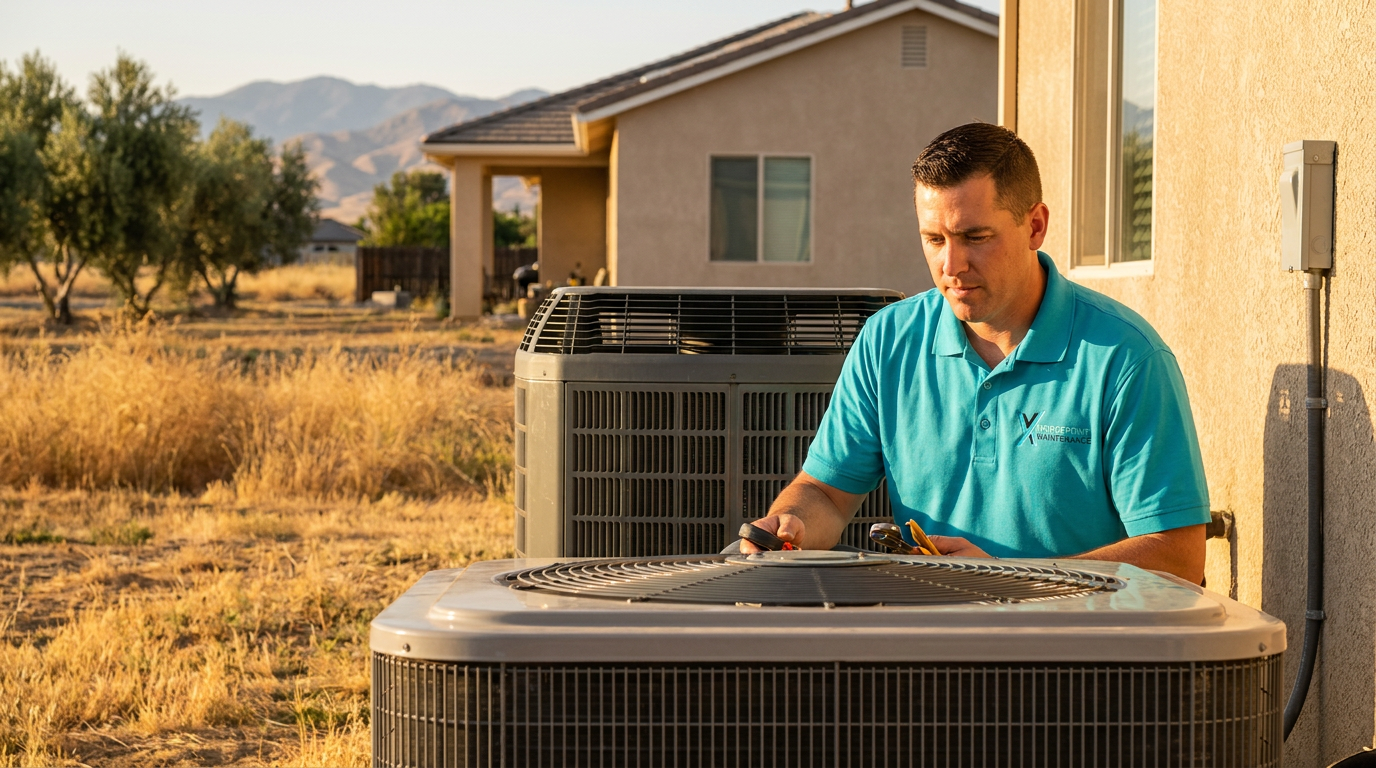
Commercial HVAC in San Francisco
HVAC in San Francisco, CA
Licensed hvac in San Francisco, CA. Serving Mission District and Pacific Heights. Flat rate quotes, photo documented closeout, 24/7 dispatch.
- Licensed (CSLB)
- Bonded
- Insured
- Background-checked crews
- Photo-documented
Why San
Why San Francisco property owners call Bridgepoint for HVAC
San Francisco's HVAC environment is unlike any other major city. The combination of roughly 108 foggy days per year, Pacific Ocean surface temperatures between 53 and 59 degrees Fahrenheit year round, and documented coastal corrosion rates twice those of inland installations means HVAC equipment ages faster and fails differently here. Bridgepoint services, replaces, and installs heating and cooling systems across all San Francisco neighborhoods, calibrating maintenance schedules to the actual coastal exposure of each building.
Licensed and. Licensed and insured HVAC technicians working across California
Single accountable. Single accountable manager per portfolio
Transparent flat. Transparent flat rate pricing
24/7 dispatch. 24/7 dispatch with documented response times
Vendor network. Vendor network vetted for property managers and institutional owners
HVAC services
HVAC services we provide across San Francisco
Bridgepoint's HVAC service covers wall furnace and central heating system repair and replacement, ductless mini split installation and service, central air conditioning where applicable, condenser coil cleaning and protective coating calibrated to coastal exposure, refrigerant service, indoor air quality assessment and ventilation improvements, and emergency heating and cooling response. All work is permitted through the DBI where required, and crews hold CSLB licensing.
Residential Hvac Repair
Residential hvac repair for single family and multifamily
Commercial Hvac Repair
Commercial hvac repair for retail, office, and mixed use
Property Management Hvac Repair
Property management hvac repair for portfolio operators
New Construction And Tenant Improvement
New construction and tenant improvement hvac repair
Preventive Maintenance Contracts
Preventive maintenance contracts
Specific hvac jobs we handle in San Francisco
- ac repair services
- ac installation
- ductless mini splits
- duct repair services
- indoor air quality solutions
- plumbing maintenance
- water heater solutions
- water heater installation
- water treatment systems
- furnace repair
- licensed HVAC technician
- 24/7 emergency
Transparent San
Transparent San Francisco hvac pricing and free estimates
Most San Francisco competitors hide pricing behind a phone call. Here is what typical work runs, so you can budget before you book. Written estimates are free and the final price is confirmed flat rate on site.
| Service | Typical price range | Notes |
|---|---|---|
| AC diagnostic and repair | $150 to $650 | Most common summer call |
| Capacitor or contactor replacement | $180 to $400 | The number one heat wave failure |
| Refrigerant leak detection and recharge | $300 to $800 | EPA certified, leak located first |
| Condenser coil cleaning | $180 to $400 | Recommended yearly |
| Duct sealing and balancing | $600 to $2,500 | Recovers attic air loss |
| Ductless mini split install | $3,800 to $9,500 | Per zone, homes without ductwork |
| Full system replacement | $6,500 to $14,000 | Sized to local load, Title 24 documented |
| Furnace repair | $180 to $900 | Heat exchanger and ignition |
How our pricing works
- Flat rate quoted and approved before any work begins
- Hourly billing only for open ended diagnostics, disclosed up front
- Free written estimate on replacements and larger scopes
- Parts, labor, and permit fees itemized on the quote
HVAC service
HVAC service areas across San Francisco
We dispatch licensed hvac crews across every San Francisco neighborhood, with stocked trucks for first visit completion.
Neighborhoods we serve in San Francisco
Request hvac
Request hvac service in San Francisco
Tell us the trade, your address, and the urgency. A live dispatcher confirms your arrival window, and emergencies move to the front of the queue.
Our San
Our San Francisco hvac process
Four steps, documented end to end.
- 1
Request dispatch
- 2
On site diagnosis and quote
- 3
Approved scope of work
- 4
Documented completion and warranty
What to
What to expect from our San Francisco HVAC team
We earn trust with documentation, not slogans. Every job includes:
A named flat rate agreed before work starts, so the invoice matches the quote.
A licensed, insured technician on every visit, with the license number on your paperwork.
A photo documented closeout showing the work completed, ready for an owner report.
A direct line back to the same dispatch desk if anything needs a follow up.

Common San
Common San Francisco hvac problems we solve
The failures here are specific and predictable.
Climate driven. Climate driven hvac repair failures specific to California
Aging building. Aging building stock and retrofit hvac repair demands
Code triggered. Code triggered upgrades during permitting
HVAC licensing
HVAC licensing and code in San Francisco
This work is regulated, and shortcuts cost owners at resale and on insurance claims.
Verifiable state license. Every crew works under the California Contractors State License Board, and the license number is verifiable online.
Permitting and inspection. We pull the permits a job needs and document code compliance.
Insurance and bonding. Crews are bonded and insured to California minimums, with proof on request.
Understanding hvac
Understanding hvac in San Francisco
A deeper look at how San Francisco conditions shape the hvac work owners actually need.
The coastal corrosion problem is the defining technical challenge for HVAC work in San Francisco. Published data on coastal HVAC installations documents corrosion rates approximately twice those of inland equivalents, driven by salt laden marine air that attacks aluminum fins, copper refrigerant lines, electrical connections, and steel fasteners simultaneously. A condenser unit installed at a Sunset District building and a condenser unit installed at an inland Sacramento building will follow dramatically different maintenance and replacement timelines even if they are the same model from the same manufacturer. Bridgepoint addresses this by applying protective epoxy coatings to condenser fins after installation and after each major cleaning, specifying stainless steel fasteners and conduit for outdoor components, and shortening coil inspection intervals to match the actual corrosion rate rather than the manufacturer's inland calibrated schedule. The mini split question is central to San Francisco HVAC planning. Victorian and Edwardian rowhouses typically have no ductwork and adding central forced air requires invasive structural work that most property owners avoid.
Ductless mini splits solve the cooling problem without ductwork, but their wall penetrating refrigerant lines and outdoor condensers need proper sealing and coastal appropriate materials. A poorly sealed wall penetration in a Haight-Ashbury Victorian becomes a moisture intrusion point that feeds the same mold risk that the climate already creates through fog absorption. Indoor air quality is a secondary but real concern. High ambient humidity in fog exposed buildings creates conditions for mold and mildew inside walls and attics, particularly in structures with limited mechanical ventilation. Bridgepoint's indoor air quality assessments identify ventilation gaps that, when addressed, reduce both air quality risk and the moisture accumulation that accelerates other building failures.
Industries we
Industries we serve in San Francisco
HVAC scoped to how your property actually operates, from a single rental to an institutional portfolio.
San Francisco
San Francisco guides and resources
Practical guides for San Francisco owners and property managers.
Answers
Frequently asked questions
Why does HVAC equipment fail faster in San Francisco than other cities?+
Salt laden marine air from the Pacific corrodes aluminum fins, electrical connections, and refrigerant lines at roughly twice the rate seen in inland California cities. Equipment near the Bay in SoMa or the Sunset District is exposed to this environment daily.
Do Victorian rowhouses need ductwork for a mini split installation?+
No. Ductless mini splits connect through a small wall penetration and do not require ductwork. This makes them the practical choice for older SF rowhouses where adding central ducts would require removing walls and ceiling structure.
How often should condenser coils be cleaned in a Sunset District building?+
In fog belt neighborhoods like the Sunset and Richmond, we recommend coil cleaning and protective coating inspection at least twice per year rather than the standard annual schedule used for inland installations.
Do San Francisco buildings need air conditioning?+
Most western neighborhoods rely on natural ventilation from Pacific air and rarely need mechanical cooling. Eastern neighborhoods like the Mission and SoMa get warmer and have benefited from mini split installations, particularly as heat events have become more frequent.
What heating systems are common in older SF buildings?+
Wall furnaces and original floor furnace systems are common in Victorian stock. Central forced air is more common in 1940s through 1960s apartment buildings. Both require maintenance calibrated to the coastal environment.
Can you improve indoor air quality in a fog exposed building?+
Yes. Ventilation improvements, ERV or HRV installations, and exhaust fan upgrades reduce indoor humidity and the mold risk that comes with fog belt exposure. Bridgepoint assesses each building's current ventilation before recommending changes.
More in San Francisco
Other Bridgepoint services in San Francisco
One dispatch number covers every trade. Explore the rest of what we run in San Francisco.
Get in touch
Need commercial hvac in San Francisco?
Call dispatch to scope service, request a quote, or set up a maintenance contract in San Francisco.